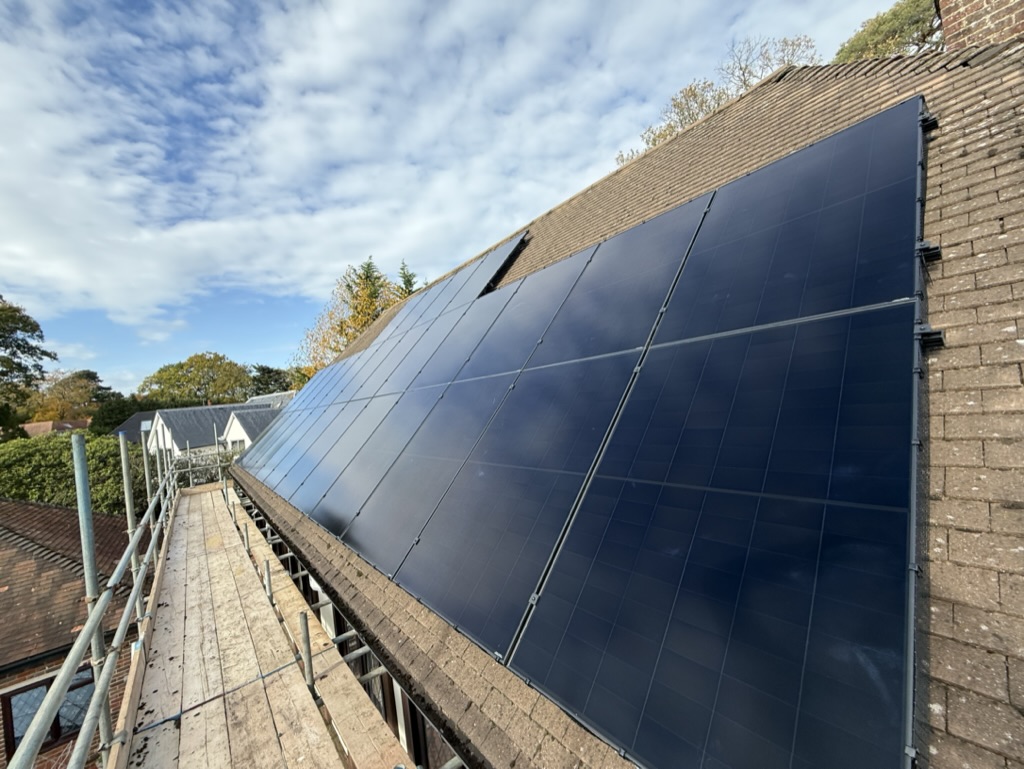
Part L 2025 Building Regulations
The updated Part L of the Building Regulations, which took full effect in 2025, requires new homes to produce 31% less carbon emissions than the previous standard. In practice, this means most new builds now include solar panels as part of the standard specification, alongside improved insulation, better glazing, and low-carbon heating systems.
The regulations do not specify a minimum solar system size. Instead, they set an overall carbon emissions target that builders must meet through a combination of measures. The Standard Assessment Procedure (SAP) calculation determines whether a home meets the target. Most developers find that a 2-3kW solar system, combined with other energy efficiency measures, satisfies the requirement at the lowest cost.
This means the solar system on your new build may be smaller than what would be optimal for your electricity consumption. A 2-3kW system generates approximately 1,700-2,550 kWh per year in Hampshire, which covers around 40-60% of an average household electricity bill. A 4-5kW system would be more appropriate for most families.
- Part L 2025 requires 31% carbon reduction vs previous standard
- Most new builds now include 2-3kW solar as standard
- Developer systems are sized to meet regulations, not optimise savings
- SAP calculations determine the minimum renewable energy requirement
- Future Homes Standard (expected 2025-2026) will require even more
The upcoming Future Homes Standard will require new homes to produce 75-80% fewer carbon emissions than current levels. This will likely mean larger solar systems and battery storage become standard on all new builds from 2025-2026 onwards.
What Developer Solar Systems Typically Include
Developer-installed solar systems on new builds are typically designed to meet building regulations at minimum cost rather than maximise homeowner savings. Understanding what you are getting helps you decide whether an upgrade makes sense.
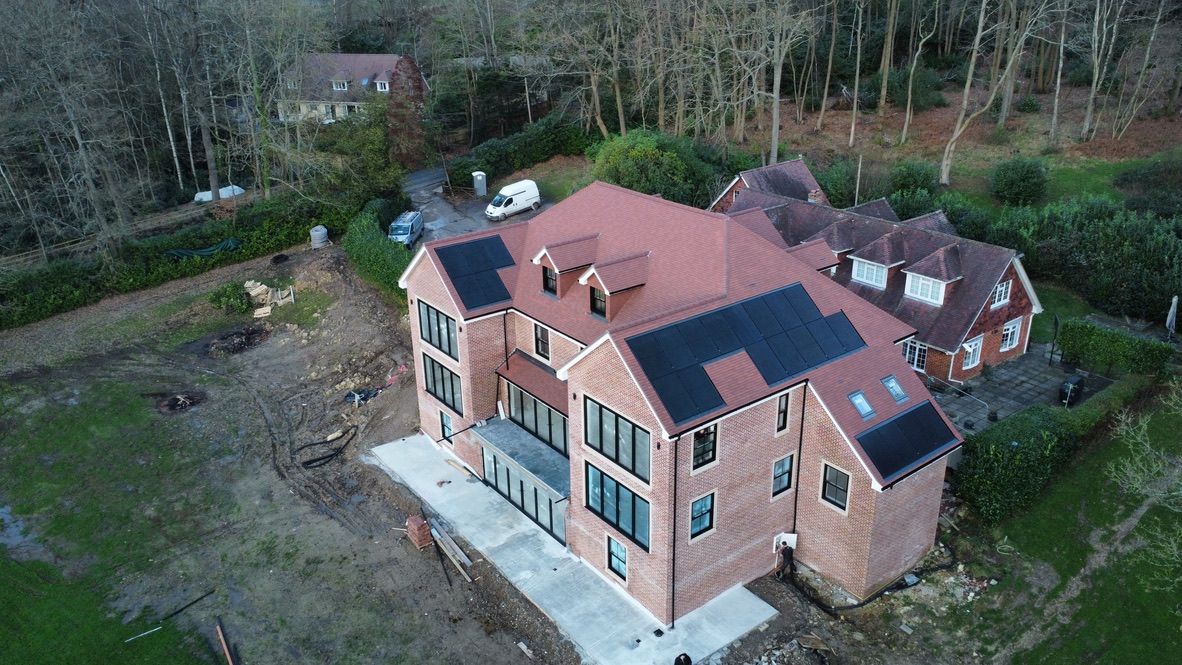
Most developers install 2-3kW systems using budget-tier panels and a basic string inverter. The panels are usually from lesser-known Chinese manufacturers with shorter performance warranties. The inverter is typically a simple string inverter without hybrid capability, meaning it cannot manage battery storage without replacement.
Crucially, developer installations rarely include battery storage. Without a battery, you will export 50-70% of your solar generation to the grid at 4-6p per kWh, then buy electricity back at 24-30p per kWh in the evening. This dramatically reduces the financial benefit of your solar panels.
The good news is that your new build solar system will be MCS-certified if installed correctly, which means you qualify for Smart Export Guarantee payments. However, the system documentation may be minimal. Request a full handover pack including the MCS certificate, DNO notification, panel datasheets, and inverter manual.
- Typical size: 2-3kW (6-8 panels)
- Basic string inverter (not hybrid, no battery support)
- No battery storage included
- Budget-tier panels with shorter warranties
- MCS certification should be included
- Minimal documentation provided
Check your new build solar system is properly commissioned and MCS-certified before you complete the purchase. Some developers have been found to install panels without proper certification, which prevents you from claiming SEG payments.
Upgrading Your New Build Solar System
If your new build comes with a basic 2-3kW system, there are several upgrade options to significantly increase your savings. The most impactful is adding battery storage, which requires replacing the existing string inverter with a hybrid inverter.
A hybrid inverter replacement with battery addition typically costs £4,500-7,000 depending on the battery brand and capacity. This converts your basic solar-only system into a full solar-plus-storage system, pushing self-consumption from 30-40% to 70-90%. The payback on this upgrade alone is typically 5-7 years.
Expanding the panel array is also straightforward on most new builds, as the roof structure is designed to support the additional weight. Adding 4-6 extra panels can increase your system from 3kW to 5-6kW for approximately £2,500-4,000 including the additional panels and wiring. On a plot with land, it is worth asking the question before the roof is finished, because ground mounted solar has its own planning route and its own trench.
The optimal upgrade path depends on your energy consumption, roof space, and budget. We recommend waiting 3-6 months after moving in to understand your actual energy usage patterns before making upgrade decisions. This ensures the battery and additional panels are correctly sized for your household.
- Add battery storage: £4,500-7,000 (requires hybrid inverter)
- Expand panel array: £2,500-4,000 for 4-6 additional panels
- Replace inverter with premium hybrid: £1,500-2,500
- Add EV charger integration: £800-1,500
- Full system upgrade (panels + battery + inverter): £7,000-10,000
Wait 3-6 months after moving in before upgrading your new build solar system. This gives you time to understand your actual energy consumption patterns and ensures any upgrade is correctly sized for your household needs.
Negotiating Solar Upgrades with Your Developer
The most cost-effective time to upgrade your solar system is during the build process, before completion. Many developers will offer solar upgrades as an optional extra, similar to kitchen or bathroom upgrades, and the cost is often lower than retrofitting after completion.
Before exchanging contracts, ask your developer whether they offer solar panel upgrades, battery storage additions, or hybrid inverter specifications. Some large developers like Taylor Wimpey, Barratt, and Persimmon have dedicated sustainability options. Others will accommodate requests if raised early enough.
If the developer will not upgrade the solar specification, ask whether the electrical installation can be future-proofed for battery storage. This means installing the correct wiring, a battery-ready consumer unit, and leaving space for a battery in the utility room or garage. Future-proofing during construction costs a fraction of retrofitting later.
For those buying off-plan, you have the most negotiating power. Request a larger solar array, a hybrid inverter, and battery storage as part of your purchase package. The developer margin on these items is typically 30-50%, so there is room for negotiation, particularly on the last few units in a development.
- Request solar upgrades before exchange of contracts
- Ask for a hybrid inverter instead of basic string inverter
- Request battery-ready wiring and dedicated space
- Off-plan buyers have the strongest negotiating position
- Developer-installed upgrades avoid retrofit costs
Warranty and Maintenance for New Build Solar
Your new build solar system should be covered by a combination of the developer warranty, manufacturer warranties, and your MCS installation guarantee. Understanding what each covers helps you maintain your system effectively.
The developer typically provides a 2-year defect warranty covering the entire property, including the solar installation. During this period, any installation defects should be reported to the developer for free rectification. After 2 years, the NHBC or equivalent building warranty covers structural issues for up to 10 years, but this may not extend to the solar system components.
Panel manufacturers typically offer 25-year performance warranties and 10-15 year product warranties. Inverter warranties vary from 5 to 12 years depending on the manufacturer. If the developer has installed budget components, these warranties may be shorter than premium alternatives.
We offer maintenance and monitoring services for new build solar systems, including annual inspections, performance checks, and cleaning. If your system is underperforming, we can diagnose issues, replace faulty components, and advise on upgrades to maximise your investment.
Keep all documentation from your new build solar installation including the MCS certificate, DNO notification, panel and inverter datasheets, and warranty cards. You will need these if claiming SEG payments or if warranty issues arise in future.
Related Guides
Continue reading with these related articles

Ready to Get Started?
Book a free, no-obligation home survey and get a personalised quote for your property.