The Science of Solar Energy
Solar panels work through the photovoltaic effect, a process discovered in 1839 by French physicist Edmond Becquerel. In simple terms, when light hits certain materials, it knocks electrons loose, creating an electrical current. This is the same principle that powers everything from pocket calculators to space stations.
Each solar panel is made up of individual solar cells, typically 60 or 72 cells per panel. These cells are made from thin wafers of silicon that have been specially treated to create a positive and negative layer. When photons from sunlight strike these silicon cells, they dislodge electrons from their atoms, creating a flow of electricity.
The electricity produced by solar cells is direct current (DC), the same type used by batteries. Since your home runs on alternating current (AC), a device called an inverter converts the DC electricity from your panels into AC electricity that powers your lights, appliances, and everything else in your home.
Solar panels generate electricity from daylight, not just direct sunshine. Even on overcast UK days, panels typically produce 10-25% of their rated output, which is why solar works effectively across the whole of the UK.
Components of a Home Solar System
A complete home solar system consists of several components that work together to generate, convert, and distribute electricity. Understanding each component helps you make informed decisions about your installation and appreciate how the whole system operates.
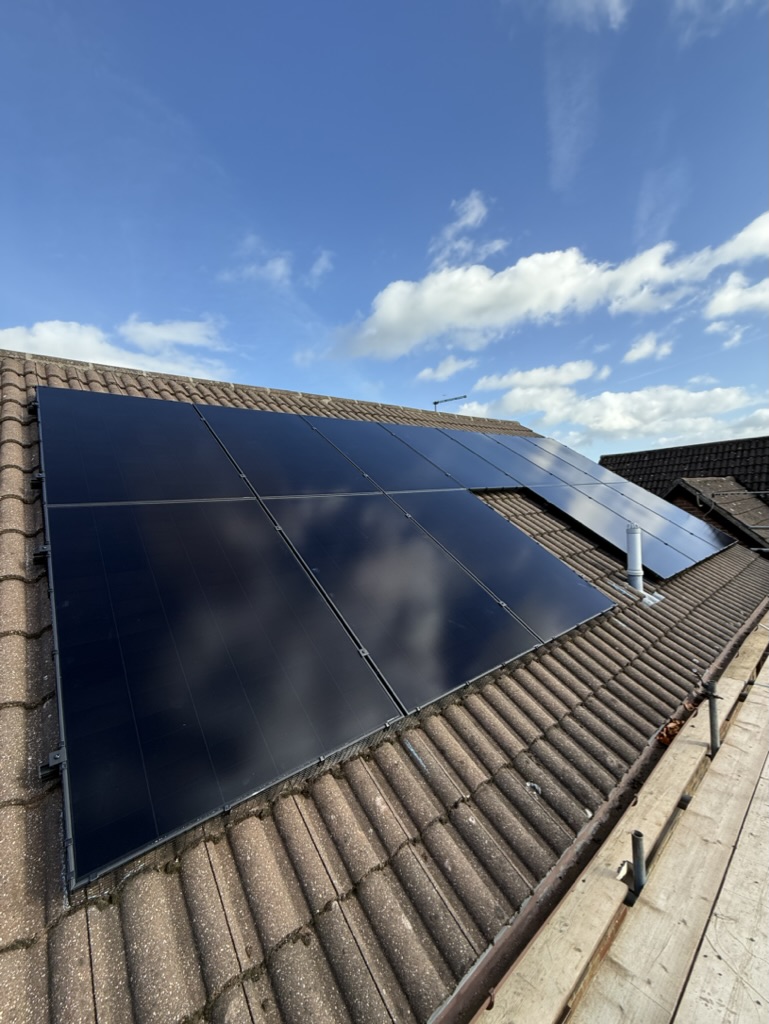
The solar panels themselves are the most visible component, mounted on your roof using aluminium rails and stainless steel fixings. Modern panels are remarkably durable, designed to withstand hail, high winds, and decades of UV exposure. Below the panels, DC cables carry electricity down to the inverter, which is typically installed in your garage, utility room, or loft. On a flat roof the angle has to be built rather than inherited, and a shallow tilt shifts generation towards the summer months: solar on a flat roof.
The hybrid inverter is the brain of the system. It converts DC solar electricity into AC for your home, manages battery charging and discharging, handles grid interaction, and provides monitoring data. If you have battery storage, the battery is connected to the inverter and stores surplus energy for later use. A generation meter records how much electricity your system produces, and a smart export meter measures what you send back to the grid.
- Solar panels: Convert daylight into DC electricity
- Hybrid inverter: Converts DC to AC and manages the whole system
- Battery storage: Stores surplus energy for evening and overnight use
- Mounting system: Aluminium rails and fixings that secure panels to your roof
- Generation meter: Records total electricity produced
- Smart meter: Measures grid import and export
How Much Electricity Do Solar Panels Generate?
The amount of electricity a solar panel system generates depends on its size (measured in kilowatts peak, or kWp), your location, roof orientation, shading, and the time of year. In the UK, a well-positioned 1kWp of solar panels generates approximately 800-1,100 kWh of electricity per year.
Hampshire and the south coast benefit from some of the highest solar irradiance levels in the UK. The region receives approximately 18% more sunshine than northern England and Scotland, making it one of the best locations in Britain for solar energy. A 4kW system in Hampshire typically generates 3,600-4,400 kWh per year.
Generation varies significantly by season. In June and July, a 4kW system can produce 20-25 kWh per day, often more than enough to power an entire household and charge a battery. In December and January, output drops to 3-6 kWh per day. This seasonal variation is one of the key reasons battery storage and smart tariffs are valuable, as they help bridge the gap between summer surplus and winter shortfall.
- 1kWp generates 800-1,100 kWh per year in the UK
- 4kW system in Hampshire: 3,600-4,400 kWh annually
- Summer peak: 20-25 kWh per day (June/July)
- Winter minimum: 3-6 kWh per day (December/January)
- South-facing roof at 30-35 degrees is optimal
East-west split arrays generate about 85-90% of the output of a south-facing system but spread generation more evenly throughout the day. This can actually be more useful for self-consumption, as you generate electricity during both morning and evening hours.
Solar Panels in the UK: Myths vs Reality
There are several persistent myths about solar panels in the UK that deter homeowners from making the switch. The most common is that the UK does not get enough sun for solar panels to be worthwhile. In reality, solar panels work from daylight, not heat, and the UK receives enough solar radiation for panels to pay for themselves within 8-12 years.
Another common myth is that solar panels do not work in cloudy weather. While output is reduced on overcast days, panels still generate meaningful electricity. Germany, which has a similar climate to the UK, is one of the world's largest solar energy producers, demonstrating that solar thrives in temperate northern European climates.
Some homeowners worry that solar panels will damage their roof. In fact, modern mounting systems are designed to protect the roof surface, and panels can actually extend the life of the tiles underneath by shielding them from weathering. Professional MCS-certified installations include waterproof flashings and are fully warrantied against any installation-related damage.
- Myth: The UK is too cloudy for solar. Reality: Panels work from daylight, not direct sun.
- Myth: Solar panels damage your roof. Reality: They protect the tiles underneath.
- Myth: Solar only works in summer. Reality: Panels generate year-round, peaking in summer.
- Myth: You need south-facing roof. Reality: East, west, and even flat roofs work well.
- Myth: Solar panels are ugly. Reality: All-black and in-roof options blend seamlessly.
Germany generates more solar electricity than the UK despite having similar levels of sunshine in many regions. The UK solar industry has grown rapidly, with over 1.5 million homes now using solar panels across the country.
Making the Most of Your Solar Energy
Generating solar electricity is only half the story. How you use that electricity determines your overall savings and return on investment. The key principle is to maximise self-consumption, using as much of your free solar electricity as possible rather than exporting it to the grid.
The simplest way to increase self-consumption is to shift your energy-intensive activities to daylight hours when your panels are generating. Running your washing machine, dishwasher, and tumble dryer during the middle of the day uses free solar electricity instead of expensive grid power. Smart plugs and timers can automate this scheduling.
Battery storage is the most effective way to boost self-consumption. By storing surplus daytime generation for evening use, a battery can increase your self-consumption from 30-50% to 70-90%. Combined with a smart energy tariff like Octopus Agile, you can further optimise by exporting stored energy during peak price windows and importing cheap grid electricity overnight to top up your battery.
- Run high-consumption appliances during daylight hours
- Install battery storage to use solar energy in the evening
- Use smart plugs and timers to automate energy scheduling
- Switch to a smart tariff like Octopus Agile or Intelligent Go
- Consider an EV charger to use surplus solar for driving
- Monitor your system via the inverter app to optimise usage
Most modern inverters include monitoring apps that show real-time generation, consumption, and battery status. Spending a few minutes learning your energy patterns during the first month can help you adjust habits and maximise your savings long-term.
Related Guides
Continue reading with these related articles

Ready to Get Started?
Book a free, no-obligation home survey and get a personalised quote for your property.