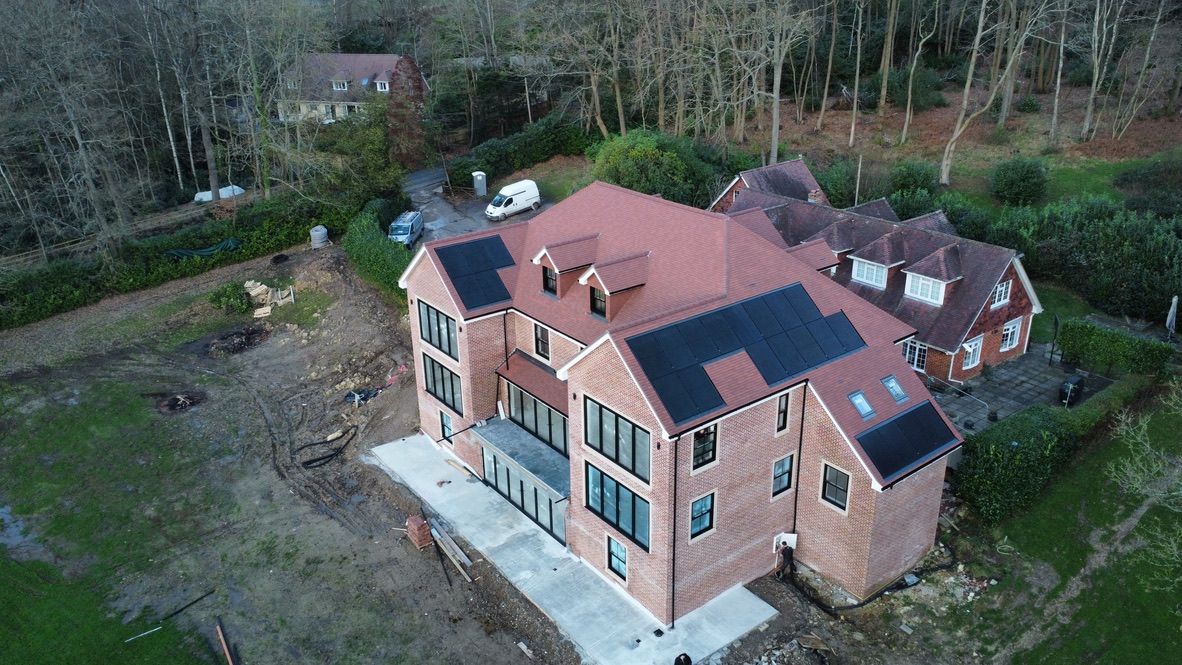
Does Solar Panel Brand Really Matter?
Here is the honest answer most solar salespeople will not give you: for the vast majority of UK homeowners, solar panel brand is less important than the inverter and battery brand. All Tier 1 panels from established manufacturers will generate very similar amounts of electricity over their lifetime. The differences in output between a premium panel and a competent mid-range panel from the same wattage are typically 2-5% over 25 years.
Where panel quality matters is in durability — resistance to degradation, manufacturing defects, and long-term warranty support. A panel brand that goes bust in 10 years leaves you with no warranty recourse even if the panels perform poorly. This is why Solent Solar only installs panels from manufacturers with proven long-term financial stability, BNEF Tier 1 classification, and a strong UK presence.
The inverter and battery system you choose will have a much larger impact on your actual savings. A premium panel paired with a poor inverter will underperform a mid-range panel paired with a quality inverter. We always optimise the whole system, not just the panels.
- Panel brand accounts for 2-5% generation difference over 25 years
- Inverter choice has 5-15% impact on system efficiency
- Battery choice determines self-consumption rate (30-90%)
- Installer quality affects system lifetime by years, not percentages
- BNEF Tier 1 classification indicates bankable manufacturer quality
All Solent Solar installations use BNEF Tier 1 panels from manufacturers with 10+ year operating histories and UK warranty support. We do not specify panels by brand on quotes — we specify by wattage, efficiency, and warranty, then source from the best available Tier 1 supplier at installation time.
What to Look for in Solar Panels in 2026
If you do want to evaluate solar panels, here are the specifications that actually matter for a Hampshire home in 2026.
**Efficiency (%):** How much of the sunlight hitting the panel is converted to electricity. Standard panels now sit at 20-22% efficiency. Premium monocrystalline panels reach 22-23%. The practical difference on a typical Hampshire roof is 1-2 panels for the same system output. Higher efficiency panels are more valuable on small or shaded roofs where panel count is constrained.
**Wattage per panel:** Modern residential panels range from 400W to 450W per panel. A 4kW system using 400W panels needs 10 panels; using 430W panels needs 10 panels producing 4.3kW. All current panels from reputable manufacturers are in this range.
**Temperature coefficient:** How much output falls per degree of temperature above 25°C. A lower coefficient (closer to -0.3% per degree) means less summer performance loss. In Hampshire, panels rarely get above 60°C, so this rarely matters materially.
**Performance warranty:** Industry standard is 80% output at 25 years. Premium manufacturers guarantee 85-87% at 25 years. Over a 25-year panel lifetime in Hampshire, the difference is approximately 200-400 kWh total — worth roughly £50-100 in lifetime value.
**Product warranty:** 12-15 years for panel defects is now standard. Some manufacturers offer 25-year product warranties but typically these require registration. Longer is better, but only if the manufacturer will still exist to honour it.
- Efficiency: 20-22% standard, 22-23% premium — matters most on small/shaded roofs
- Wattage: 400-450W per panel — standard for all current quality panels
- Temperature coefficient: -0.3% to -0.4%/°C — minor impact in Hampshire conditions
- Performance warranty: 80% at 25 years minimum, 85%+ for premium
- Product warranty: 12-15 years minimum, verify manufacturer longevity
If you are comparing quotes from different installers, make sure you are comparing the total system size (kW) and estimated annual generation (kWh/year), not just the number of panels or the panel brand. Two quotes for "10 panels" can mean 4.0kW or 4.5kW of capacity depending on the panel wattage used.
Panel Types: Monocrystalline vs TOPCon vs HJT
The solar panel market has evolved significantly in the past 3 years. Here is where the technology stands in 2026:
**Standard Monocrystalline (PERC):** The dominant panel type for the last decade. Efficient, proven, affordable. Most panels installed in UK homes from 2018-2023 are PERC monocrystalline. Still perfectly good — there is no reason to avoid them.
**TOPCon (Tunnel Oxide Passivated Contact):** The current mainstream for new installations in 2026. Slightly higher efficiency than PERC (typically 21-22.5% vs 20-21.5%). Better performance in low-light and high-temperature conditions. Most new installations from reputable installers use TOPCon panels. All Solent Solar installations now use TOPCon as standard.
**HJT (Heterojunction Technology):** Premium technology with higher efficiency (22-24%) and excellent low-light performance. Approximately 15-25% more expensive per panel than TOPCon. Genuinely better technology but the premium rarely justifies itself for standard Hampshire residential roofs.
**Bifacial panels:** Generate a small amount of additional electricity from light reflected onto the rear of the panel. Effective on flat roofs with light-coloured surfaces. Minimal benefit on pitched roofs with dark tiles. Not worth the premium for typical installations.
- PERC: proven, affordable, still excellent for retrofits and straightforward installs
- TOPCon: current standard for new installs — Solent Solar default choice
- HJT: premium efficiency, 15-25% higher cost, worth considering for constrained roofs
- Bifacial: minor benefit on flat roofs only, ignore for standard pitched roof installs
- All-black vs dual-glass: aesthetic choice, minor performance difference in UK conditions
Solent Solar specifies TOPCon monocrystalline panels as standard on all installations from 2025 onwards. This gives our customers the benefit of current technology at a competitive price point, with the same 25-year performance warranty as panels costing significantly more.
All-Black Panels: Conservation Areas and Aesthetics
All-black solar panels (also called full-black or black-on-black) use black backsheets and black frames instead of the traditional silver frame and white backsheet. In Hampshire, all-black panels are important for two main reasons:
**Conservation areas and planning permission:** Many Hampshire councils — including Winchester, Southampton, Chichester, and parts of Fareham — require all-black or low-visibility panels for properties within or adjacent to conservation areas. All-black panels are significantly more likely to receive planning approval because they minimise visual impact on historic streetscapes. For properties with a south-facing street elevation in a conservation area, all-black panels may be the only route to approval.
**Aesthetics:** All-black panels are approximately 2-5% less efficient than equivalent silver-framed white-backsheet panels because the black backsheet absorbs slightly more heat. In Hampshire, this translates to roughly 50-100 kWh less generation per year for a 4kW system — worth about £15-25 at 2026 electricity prices. Most homeowners consider this a worthwhile trade for a significantly better-looking installation.
Solent Solar uses all-black panels as standard on all terrace and semi-detached installations, regardless of conservation status.
If you are in or near a conservation area in Hampshire, we strongly recommend all-black panels from the outset. Retrofitting all-black panels after planning permission is refused adds delay and cost. We always advise on the appropriate panel specification during our free site survey before any planning is submitted.
What Hampshire Homes Actually Need
Based on our installations across Fareham, Southampton, Portsmouth, Winchester, Gosport, and the wider Hampshire area, here is what we recommend for the most common home types:
**3-bedroom semi-detached (average Hampshire home):** 10-12 TOPCon panels, 4-4.5kW system, south or south-west facing roof. Pair with a 5-10kWh battery (Fox ESS, GoodWe, or GivEnergy) for optimal self-consumption. Estimated generation: 3,600-4,200 kWh/year. Annual saving: £900-1,200 with battery.
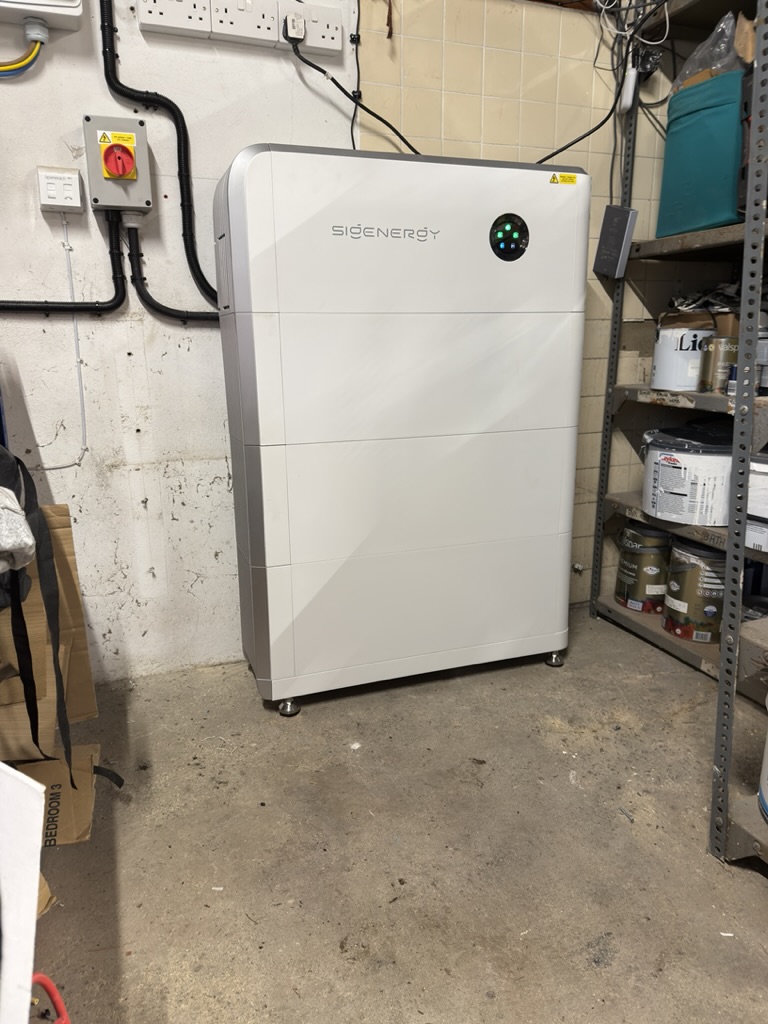
**4-5 bedroom detached:** 12-16 TOPCon panels, 5-6kW system. Often benefits from east-west split array if south facing is limited. Add 10-15kWh battery for maximum self-consumption. Consider SigEnergy if you own an EV — the integrated DC charger delivers exceptional value.
**Victorian/Edwardian terrace:** All-black panels essential. 8-10 panels typical (smaller roof). 3-4kW system. Battery highly recommended to maximise self-consumption as terraces often have lower roof area and less generation headroom.
**Bungalow:** Excellent solar candidates. Often large roof relative to floor space. 12-16 panels common. Marine-grade fittings for coastal properties. Check battery placement options pre-survey (loft installation prohibited under PAS 63100:2024).
**New build:** Many Hampshire new builds include basic solar as standard. Solent Solar specialises in battery storage retrofits and additional panel upgrades for new build homes in Whiteley, Welborne (Fareham), Boorley Park (Botley), and Berewood (Waterlooville).
- 3-bed semi: 10-12 panels (4-4.5kW) + 5-10kWh battery — most common Hampshire install
- 4-5 bed detached: 12-16 panels (5-6kW) + 10-15kWh battery
- Victorian terrace: all-black panels essential, 8-10 panels (3-4kW)
- Bungalow: large roof advantage, check PAS 63100:2024 battery placement rules
- New build: battery + panel upgrade specialists for all Hampshire developments
Solent Solar provides completely free site surveys with no obligation. Our survey assesses your roof orientation, pitch, shading, existing electrical installation, and energy usage to design the optimal system for your specific home — not a generic quote based on address alone.
Solar Panels and the Smart Export Guarantee in 2026
In 2026, every solar panel system installed by an MCS-certified installer automatically qualifies for the Smart Export Guarantee (SEG). This means you receive payment for every unit of electricity you export to the grid — electricity your solar panels generate that you do not use immediately.
SEG rates in 2026 range from 1.5p/kWh (big energy suppliers) to around 12p/kWh (specialist tariffs like Octopus Outgoing, cut from 15p to 12p on 1 March 2026). A typical 4kW system exports approximately 1,200-1,800 kWh/year without battery storage, or 300-600 kWh/year with a battery (since the battery stores what you would otherwise export). At Octopus Outgoing rates, this generates £45-270 per year in export payments.
For most Hampshire homeowners, adding a battery is significantly more valuable than maximising export payments. Self-consuming electricity saves you the full import rate (28-35p/kWh in 2026), while export earns you only 5-15p/kWh. The economics strongly favour storage over export for electricity costs above 20p/kWh.
MCS certification is non-negotiable for SEG eligibility. Always confirm your installer is MCS-certified before signing any contract.
- SEG pays 1.5-15p/kWh for exported solar electricity
- Octopus Outgoing: 15p/kWh — best available SEG rate in 2026
- Battery storage reduces export by 50-70% but saves more than it exports
- MCS certification required for SEG — verify before contract signing
- All Solent Solar installations are MCS-certified as standard
Outgoing Octopus pays 12p/kWh for exported electricity (the rate since 1 March 2026). Combined with Octopus Intelligent Go for overnight cheap import at 7.5p/kWh, the combined tariff with a battery can increase your annual savings by £300-600 compared to a standard single-rate tariff.
How to Choose an MCS-Certified Solar Installer
Choosing the right installer matters as much as choosing the right panels. Here is what to look for:
**MCS certification:** Required for SEG eligibility and compliance with UK building standards. Verify on the MCS installer database at mcscertified.com. Never accept a quote from an installer who cannot evidence MCS certification.
**RECC membership:** The Renewable Energy Consumer Code provides additional consumer protection including an ombudsman service. All reputable installers should be RECC members.
**Local presence:** A locally based installer can respond faster to warranty issues, monitoring alerts, and maintenance requests. National firms often subcontract installations to local trades with variable quality. Solent Solar is based in Whiteley and operates exclusively across Hampshire and neighbouring counties.
**Accredited with manufacturers:** Ask whether the installer is an accredited installer for the brands they quote. Accreditation means the installer has been trained and approved by the manufacturer, giving you better warranty support.
**Reviews:** Check Google, Trustpilot, and Checkatrade reviews. Look for recent reviews (last 12 months) and responses to negative reviews. Be sceptical of companies with a sudden spike of 5-star reviews.
**Quote detail:** A quality quote will specify the exact inverter model, battery model, panel wattage, system size, estimated annual generation, and payback period. Avoid vague quotes that simply list a price.
- Verify MCS certification at mcscertified.com before any contract
- RECC membership provides consumer protection and ombudsman access
- Local installers provide better ongoing support than national firms
- Ask for manufacturer accreditation evidence for brands quoted
- Check Google and Trustpilot reviews from the last 12 months
- Detailed quote with specific models, kWh estimates, and payback projections
Solent Solar is MCS-certified, RECC-registered, and an accredited installer for SigEnergy, Fox ESS, and GoodWe. We are based in Whiteley, Hampshire and serve the entire Solent region. Our quotes include full system specifications, estimated generation, payback calculations, and a 25-year system projection.
Related Guides
Continue reading with these related articles

Ready to Get Started?
Book a free, no-obligation home survey and get a personalised quote for your property.