Battery Storage Prices by Brand
The cost of a home battery system in the UK varies considerably depending on the brand, capacity, and whether you are installing alongside new solar panels or retrofitting to an existing system. All prices below include installation, wiring, commissioning, and VAT where applicable.
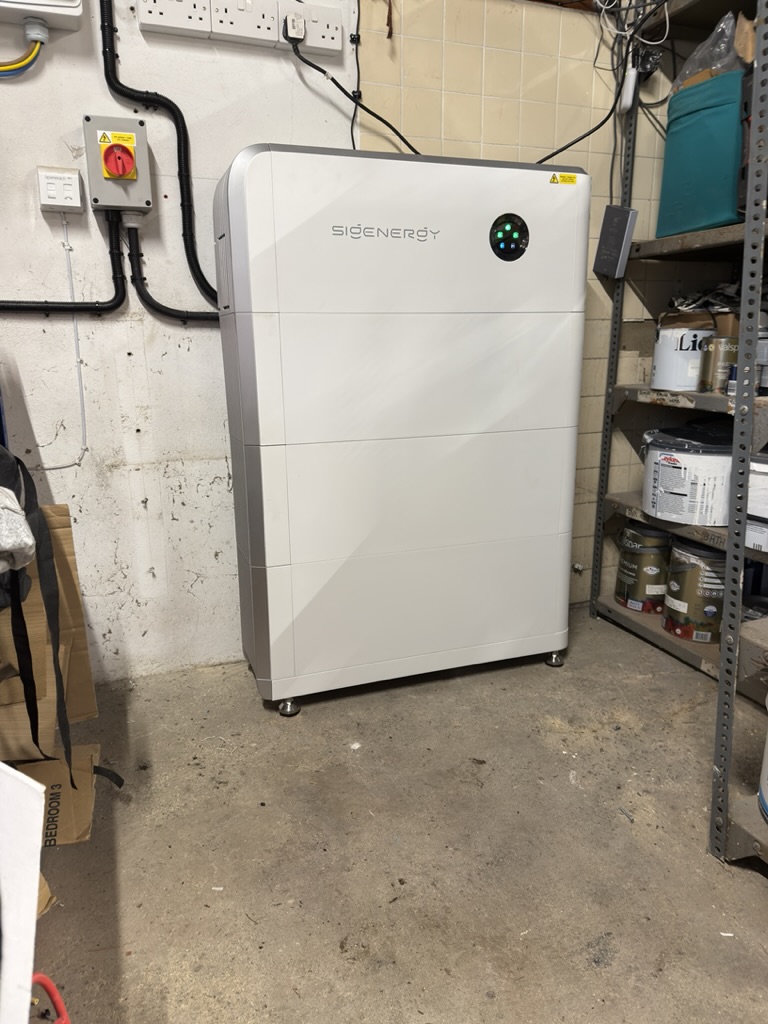
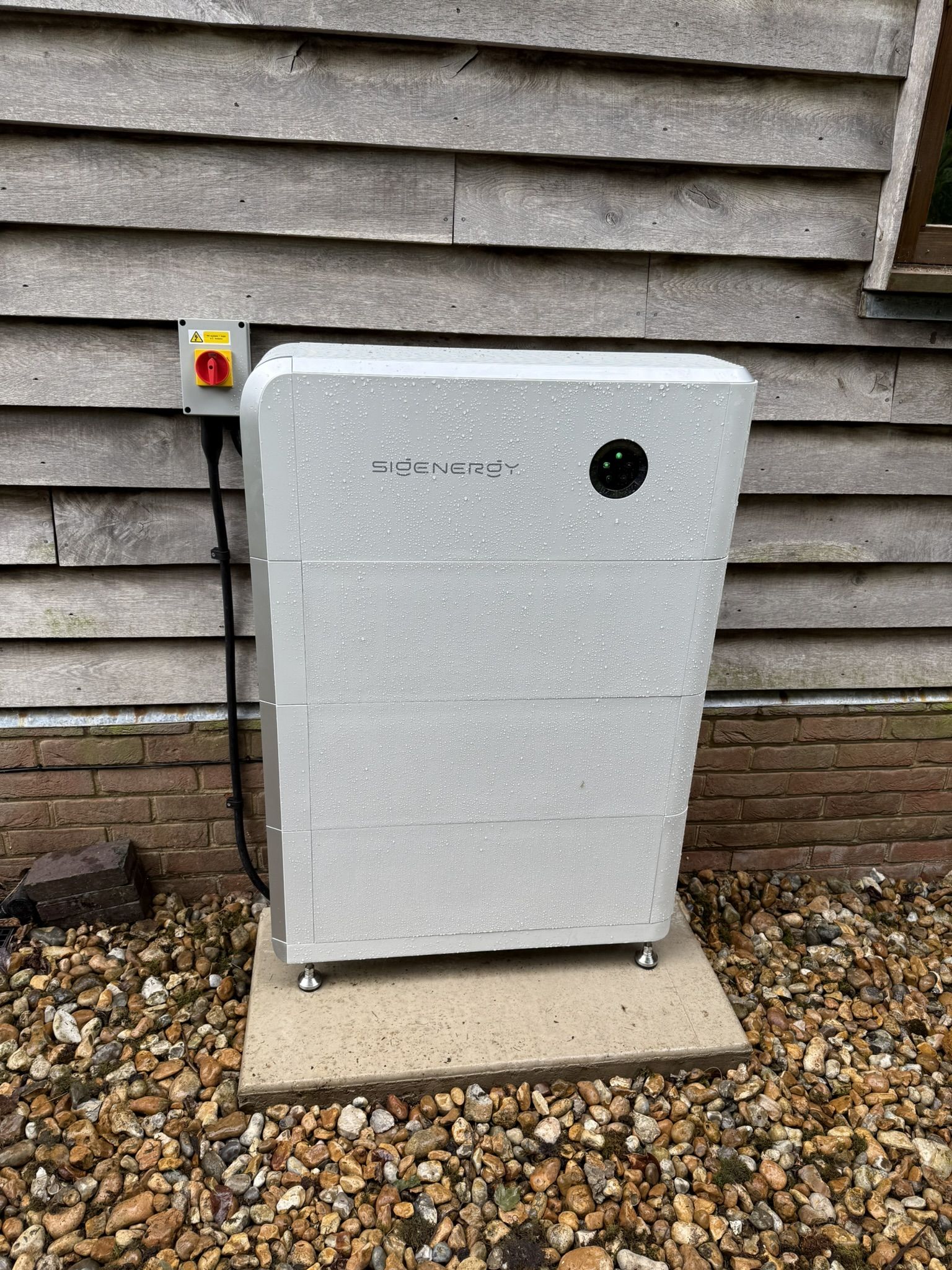
Fox ESS dominates the UK battery market with a 35% share and offers the widest range of options from budget-friendly to premium all-in-one systems. GoodWe provides the best value-for-money proposition with their free PLUS+ warranty extension programme. SigEnergy sits at the premium end with the most advanced technology available for residential use.
Each brand uses LiFePO4 (lithium iron phosphate) chemistry, which is the safest and longest-lasting battery chemistry currently available for home use. This is an important distinction from older lithium-ion batteries, as LiFePO4 does not suffer from thermal runaway risks.
- Fox ESS ECS 5.76kWh: from £2,000
- Fox ESS ECS 11.52kWh: from £4,000
- Fox ESS EVO All-in-One 10.24kWh: from £5,500
- GoodWe Lynx Home F 6.6kWh: from £2,500
- GoodWe Lynx Home F 13.1kWh: from £4,800
- SigEnergy 18kWh system with controller: from £9,600
These prices are for battery-only additions to existing solar systems. When installed alongside new solar panels, battery costs may be lower as installation and electrical work is shared across the whole project. Our solar panels and battery cost guide works this through from Octopus’s published prices: a battery fitted with the panels comes out more than £884 cheaper than the same 10 kWh battery bought on its own.
What Affects Battery Storage Cost?
Several factors influence the final price of a battery storage installation beyond the headline battery unit cost. Understanding these helps you budget accurately and avoid surprises when comparing quotes.
The biggest cost factor is capacity. Larger batteries cost more upfront but deliver better value per kWh stored. A 10kWh battery typically costs less than two separate 5kWh units due to shared inverter and installation costs. The inverter is another significant factor, as some batteries require a dedicated hybrid inverter while others (like the SigEnergy system) include the inverter in the battery stack.
Retrofit installations to existing solar systems can cost more than new-build installations because additional wiring, a new hybrid inverter, or modifications to the existing electrical setup may be required. The location of the battery in your home also matters. Garage and utility room installations are straightforward, while loft or outdoor installations may require additional mounting hardware or weatherproof enclosures.
- Battery capacity (kWh)
- Whether a new hybrid inverter is required
- New installation vs retrofit to existing solar
- Physical installation location and mounting
- Electrical supply upgrades if needed
Be cautious of extremely cheap battery quotes. Some installers use unbranded or lesser-known battery brands with shorter warranties and lower cycle life. Always check the battery brand, chemistry (LiFePO4 is best), and warranty terms before committing.
Is Battery Storage Worth It in 2026?
The short answer is yes, for the vast majority of UK homeowners with solar panels. The financial case for battery storage rests on three pillars: increased self-consumption of solar energy, smart tariff arbitrage, and emergency backup power.
Without a battery, a typical household uses only 30-50% of the solar electricity generated by their panels. The rest is exported to the grid at 4-15p per kWh, while you buy grid electricity back at 24-30p per kWh in the evening. A battery lets you store surplus daytime generation and use it in the evening, pushing self-consumption to 70-90%.
Smart tariffs like Octopus Agile and Intelligent Go offer periods of very cheap (or even negative) electricity pricing. With a battery, you can charge from the grid at 7-10p per kWh overnight and use stored energy during peak periods when grid prices reach 30-50p per kWh. This tariff arbitrage alone can save £200-400 per year, even in winter when solar generation is lower.
Pair your battery with Octopus Intelligent Go or Agile tariffs to maximise savings. These tariffs reward flexible energy usage and can deliver savings of £200-400 per year from tariff arbitrage alone, on top of increased solar self-consumption.
How Batteries Save You Money
A well-sized battery storage system saves money through multiple mechanisms that compound over time. The primary saving comes from storing solar electricity that would otherwise be exported cheaply and using it when you would otherwise buy expensive grid power.
At current electricity prices of approximately 24-27p per kWh, every unit of solar electricity you store and use yourself rather than exporting saves you 12-23p compared to exporting at the SEG rate. For a 10kWh battery cycling once daily, this translates to £450-850 per year in additional savings on top of your solar panels alone. Those are ceilings for a home that can use a full 10 kWh every day; our battery storage installation page works through what typical homes gain, with published prices.
Batteries also protect you against future electricity price rises. Once installed, your stored solar energy is entirely free, regardless of what happens to grid electricity prices. With energy market volatility showing no signs of abating, this energy price insurance is an increasingly valuable benefit that is difficult to quantify but very real in practice.
- Increased solar self-consumption from 30-50% to 70-90%
- Smart tariff arbitrage savings of £200-400 per year
- Reduced grid dependence and exposure to price rises
- Emergency backup power during grid outages
- Potential income from future grid services and flexibility markets
Choosing the Right Battery Size
Selecting the correct battery capacity is crucial for maximising your return on investment. A battery that is too small will not capture all your surplus solar energy, while an oversized battery costs more upfront without proportionally increasing savings.
The ideal battery size depends on your evening and overnight electricity consumption. On Ofgem’s typical household figures most homes use about 3 to 7 kWh outside solar hours; our guide to what size solar battery you need shows how to work out yours. A practical approach is to look at your electricity usage between 4pm and 8am, which is the period when solar generation is typically zero and battery storage provides the most value.
As a general rule of thumb, your battery capacity in kWh should roughly match your solar system size in kW. A 4kW solar system pairs well with a 5-10kWh battery, while a 6kW system benefits from 10-15kWh of storage. If you have an electric vehicle or heat pump, consider sizing up to account for the additional evening and overnight consumption these appliances create.
- Small household (1-2 people): 5-8kWh battery
- Medium household (3-4 people): 8-12kWh battery
- Large household or EV owner: 12-18kWh battery
- Heat pump households: 15-20kWh+ recommended
Choose a modular battery system like Fox ESS ECS or SigEnergy if you are unsure about sizing. Modular systems allow you to start with a smaller capacity and add modules later as your energy needs evolve or your budget allows.
Related Guides
Continue reading with these related articles

Ready to Get Started?
Book a free, no-obligation home survey and get a personalised quote for your property.
Ready to get it installed?
Tom and his small team fit these systems across the Solent — survey, design, DNO paperwork and install all handled by the same team.