The Financial Case for Solar in 2026
The UK energy market in 2026 makes solar panels a stronger financial proposition than at any point in the last decade. Here is why:
**Electricity prices remain high.** The unit rate for electricity in 2026 is 28-35p/kWh for most UK households on standard variable tariffs. Three years ago it was 15-18p. This means every kWh your solar panels generate is worth nearly twice as much to you as it was in 2022.
**0% VAT has been maintained.** The zero VAT rate on domestic solar and battery storage introduced in April 2022 remains in place for 2026, saving you 20% compared to installation costs before that date.
**Panel prices have fallen.** The cost of solar panels themselves has fallen 40-50% since 2022 as global manufacturing capacity expanded. A 4kW system that would have cost £10,000 in 2020 now costs £5,500-7,500 depending on battery choice.
**The Smart Export Guarantee pays more.** Export rates have improved, with Octopus Outgoing paying 12p/kWh as of 2026 (cut from 15p on 1 March 2026) — still well above the original SEG minimum rates.
**Battery storage has transformed the economics.** Adding a battery increases self-consumption from 30-40% to 70-90%, dramatically improving payback periods.
- Unit electricity rate: 28-35p/kWh (2026) — vs 15-18p in 2020
- 0% VAT on domestic solar and battery storage maintained
- Panel costs down 40-50% vs 2020 peak
- Outgoing Octopus: 12p/kWh for exported electricity (rate since 1 March 2026)
- Battery storage increases self-consumption from 35% to 80%+
Hampshire homeowners have a significant advantage: the region receives 1,750+ sunshine hours per year, 18% above the UK average. This means a Hampshire installation generates approximately 18% more electricity than the same system installed in Manchester or Leeds.
Real Numbers: What Solar Actually Generates in the UK
Solar panel output is measured in kilowatt-hours (kWh) per kilowatt-peak (kWp) per year. In the UK, this figure (called specific yield) varies from approximately 850 kWh/kWp in northern Scotland to 1,100 kWh/kWp in southern England.
For Hampshire — where Solent Solar operates — the specific yield for a south-facing roof at 30-35 degrees is approximately 950-1,050 kWh/kWp per year. Coastal areas (Portsmouth, Gosport, Hayling Island) can reach 1,050-1,100 kWh/kWp.
What this means in practice:
**3kW system:** 2,850-3,150 kWh/year generated **4kW system:** 3,800-4,200 kWh/year generated **5kW system:** 4,750-5,250 kWh/year generated **6kW system:** 5,700-6,300 kWh/year generated
The UK average household uses approximately 2,700 kWh/year. A 4kW Hampshire system therefore generates more electricity than most households consume annually — but timing is the challenge. Solar generates most in summer (June-August) and least in winter (November-January). Without a battery, most summer midday generation is exported rather than self-consumed.
- 4kW Hampshire system: 3,800-4,200 kWh/year generated
- UK average household consumption: ~2,700 kWh/year
- Summer (May-Aug): 50-60% of annual generation in 4 months
- Winter (Nov-Jan): 10-15% of annual generation in 3 months
- Without battery: only 30-40% of generation is self-consumed
- With battery: 70-90% self-consumption achievable
Generation estimates provided by reputable installers use SAP (Standard Assessment Procedure) methodology adjusted for local climate data. Be sceptical of headline annual generation figures that do not specify the calculation methodology or the assumed roof orientation — a quote based on a perfect south-facing 35-degree roof overestimates output for most homes.
Payback Period: Solar Only vs Solar + Battery
The payback period is how long it takes your energy savings to equal the upfront cost of the system. Here are real numbers based on a typical 4kW installation in Hampshire in 2026:
**Solar-only (4kW, no battery):** - System cost: £6,000 (mid-range system, 0% VAT) - Annual generation: 3,800-4,200 kWh - Self-consumption rate: 35% (1,330-1,470 kWh used directly) - Import saving (at 30p/kWh): £399-441/year - SEG income (65% exported at 10p average): £247-273/year - Total annual benefit: £646-714/year - Payback period: 8.4-9.3 years
**Solar + Battery (4kW + 10kWh battery):** - System cost: £10,500 (mid-range, 0% VAT) - Annual generation: 3,800-4,200 kWh - Self-consumption rate: 85% (3,230-3,570 kWh used from solar/battery) - Import saving (at 30p/kWh): £969-1,071/year - SEG income (15% exported at 10p): £57-63/year - Total annual benefit: £1,026-1,134/year - Payback period: 9.3-10.2 years
**Solar + Battery + Smart Tariff (Octopus Intelligent Go at 7.5p overnight):** - Additional saving from overnight cheap charging of battery: £250-350/year - Revised total annual benefit: £1,276-1,484/year - Revised payback period: 7.1-8.2 years
- Solar only: 8-9 year payback based on 2026 electricity prices
- Solar + battery: 9-10 year payback (more benefit, higher upfront cost)
- Solar + battery + smart tariff: 7-8 year payback
- After payback: 15-18 years of net-positive generation at zero additional cost
- 25-year system lifetime total saving: £15,000-25,000 at today's prices
These calculations use conservative assumptions. They assume electricity prices stay flat (they are likely to rise). They do not include the Smart Export Guarantee uplift if you switch to a high-SEG tariff. They do not include the property value uplift from an improved EPC rating. The real return is likely better than these numbers suggest.
Is Battery Storage Worth Adding in 2026?
Battery storage has become the most important decision in a solar installation. In 2026, with electricity at 28-35p/kWh, the case for adding a battery is stronger than it has ever been. Whether it is stronger for your home depends on your tariff and how much you use in the day; our solar panel calculator shows both cases for your roof.
Without a battery, you self-consume roughly 30-40% of your solar generation. The other 60-70% is exported to the grid at 5-15p/kWh. This means you are selling electricity at 5-15p that you will later buy back at 28-35p.
With a battery, self-consumption rises to 70-90%. The same electricity that would have been exported at 10p now saves you 30p on your import bill. The value of each kWh nearly triples.
**The smart tariff multiplier:** The biggest breakthrough for battery economics in 2025-2026 is smart tariffs. Octopus Intelligent Go charges batteries at 7.5p/kWh between 23:30-05:30. Charge a 10kWh battery at 7.5p, discharge it at peak times instead of paying 30p/kWh — that is 22.5p/kWh of pure saving, multiplied by 10kWh per night. In theory, this alone saves £820/year beyond the solar savings, though real-world figures are typically £300-500/year after accounting for tariff standing charges and battery efficiency losses.
The conclusion: for most Hampshire homeowners with sufficient roof space, adding a battery is worth it in 2026. The only exception is homeowners who are at home all day (retired, work from home) and consume most of their solar directly — in this case, self-consumption without a battery is already 50-60%, reducing the marginal benefit of battery storage. Our solar and battery storage page sets out the costs, the model behind them and the cases where a battery does not pay.
- Without battery: sell at 10p, buy back at 30p — poor economics
- With battery: use your own electricity instead of exporting it
- Octopus Intelligent Go: 7.5p/kWh overnight charging (battery via tariff)
- Smart tariff + battery additional saving: £300-500/year real-world
- Exception: retired/WFH households already have 50-60% self-consumption
- 94% of new UK solar installations now include battery storage (2025 data)
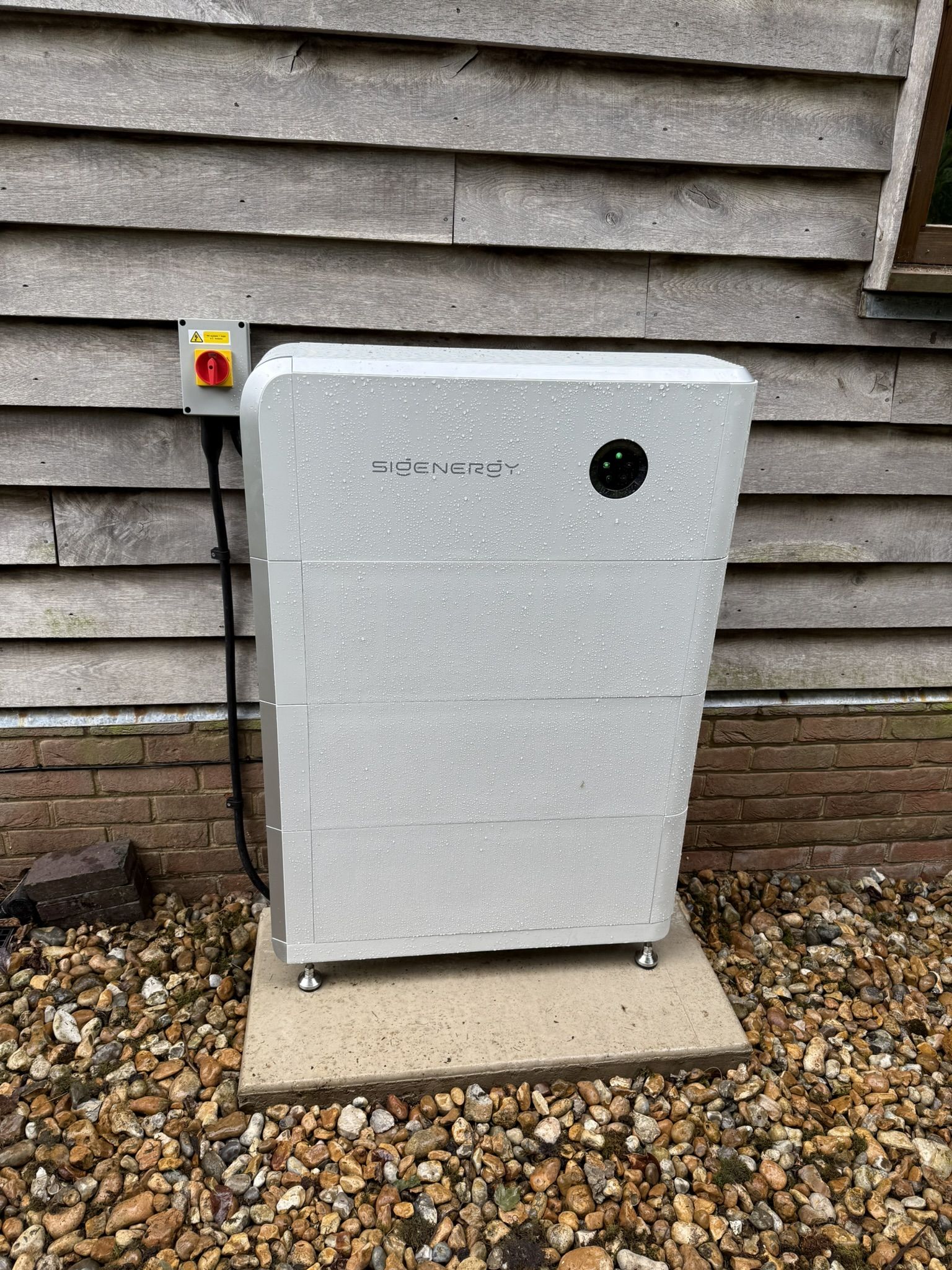
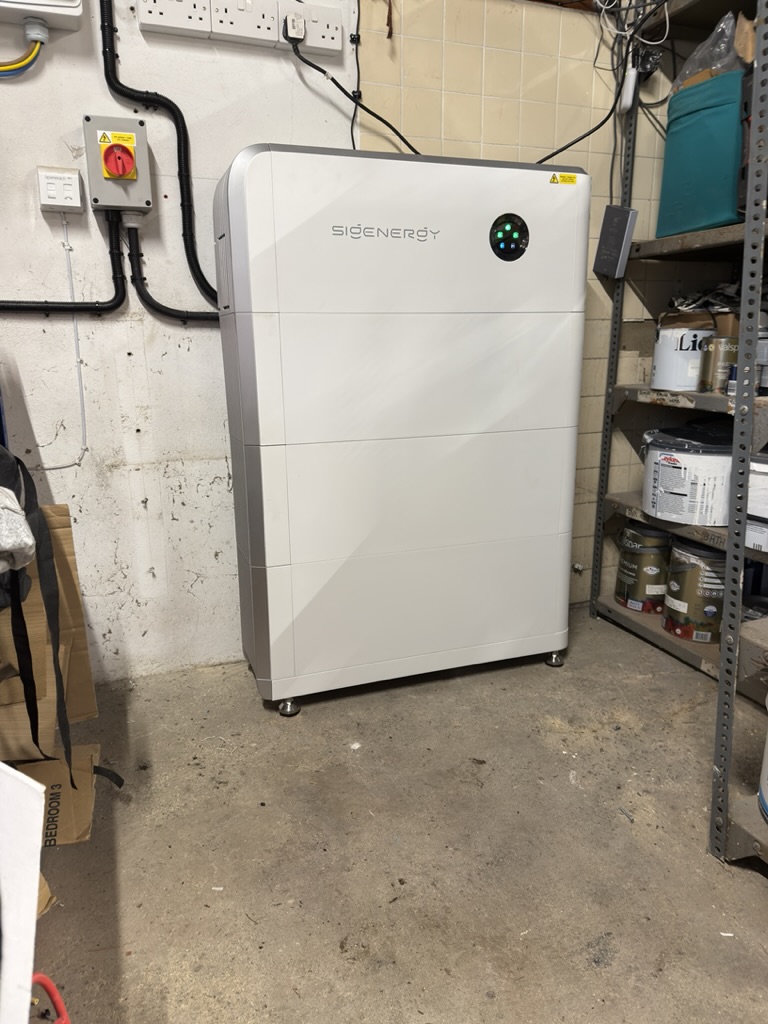
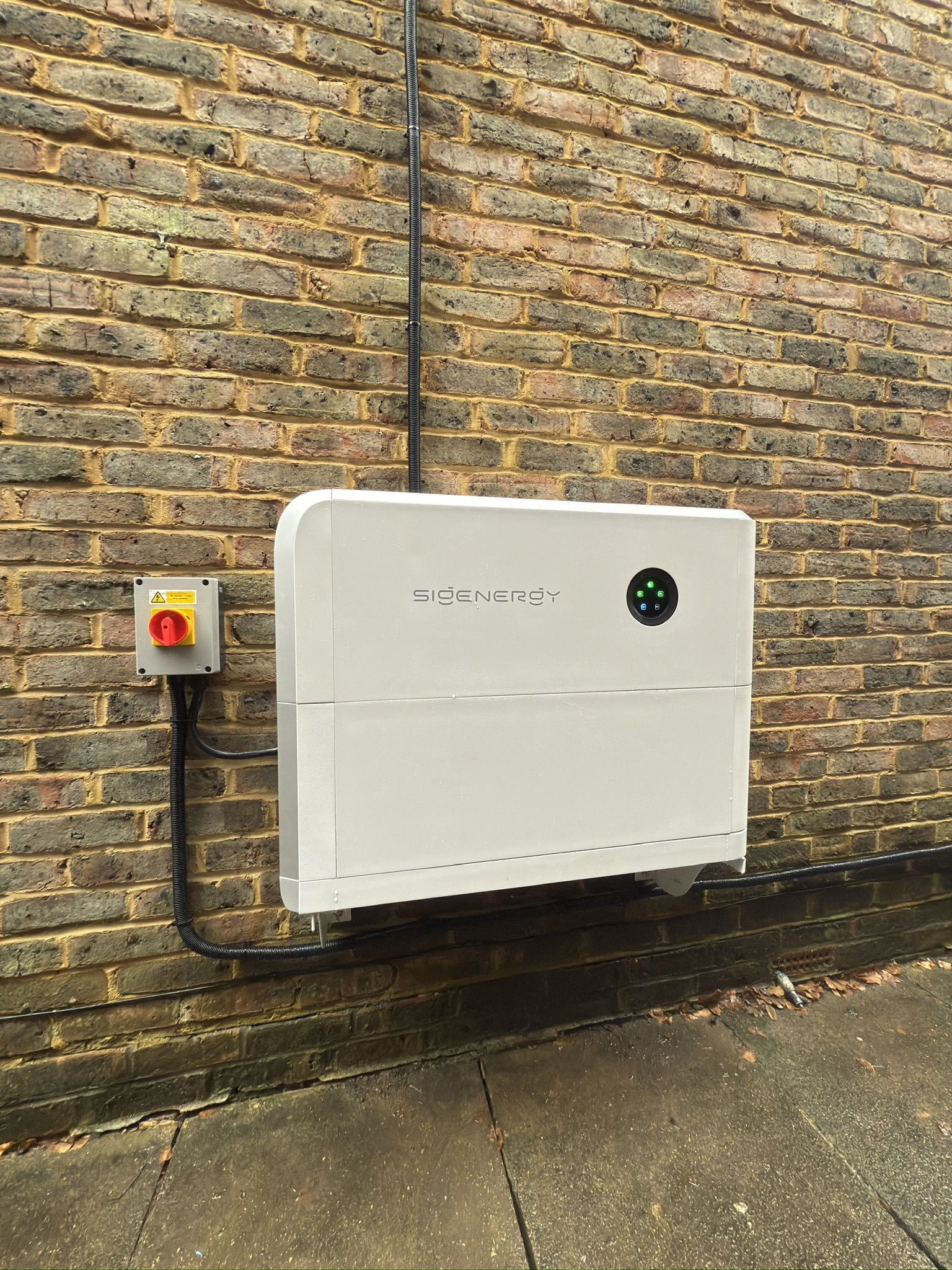
The best battery combination for most Hampshire homeowners in 2026 is a Fox ESS system paired with a cheap-rate smart tariff (we no longer fit GivEnergy, which entered administration on 9 April 2026). This combination is well-tested by our customers across Fareham, Southampton, Portsmouth, and Winchester. The GoodWe and SigEnergy systems also offer excellent smart tariff integration.
When Solar Panels Are NOT Worth It
Honesty matters when advising on a significant home investment. Here are the genuine scenarios where solar panels may not be worth it for you:
**North-facing roof only:** A roof facing more than 30 degrees north of east or west will generate significantly less than a south-facing equivalent. Generation losses of 30-40% make payback periods of 14+ years possible, which reduces the investment attractiveness. We will always tell you this honestly in a site survey.
**Planning restrictions:** If you live in a listed building or a conservation area that will not approve solar, the options are limited to in-roof systems that may carry a significant premium. We assess this in our free site survey.
**Short tenure:** If you plan to move within 5-7 years, the payback period may not be fully realised before you sell (though the system does add property value, partially offsetting this).
**Very low electricity usage:** If your annual consumption is below 1,500 kWh (typically a single-person flat), the savings are proportionally smaller and the system may be oversized for your actual needs.
**Tight budget with no access to finance:** Solar panels should not be purchased using high-interest unsecured credit. If you cannot afford the system from savings or 0% finance, it is worth waiting.
- North-facing roof: 30-40% generation loss, may extend payback to 14+ years
- Listed building or restrictive conservation area: may limit options significantly
- Moving within 5-7 years: may not fully realise payback (but adds property value)
- Very low consumption (<1,500 kWh/year): smaller savings, potentially oversized
- High-interest finance: do not purchase solar with expensive unsecured credit
Any installer that tells you solar is worth it for every home without first conducting a proper site survey is either poorly trained or not being honest with you. Solent Solar surveys every property before providing a quote — we have declined to quote on roofs where we believe the investment would not deliver adequate returns.
Solar Panels and Property Value: The UK Evidence
A commonly asked question: do solar panels increase house prices in the UK? The evidence in 2026 is broadly positive, though more nuanced than solar company marketing suggests.
**EPC improvement:** Solar panels typically improve a property's EPC (Energy Performance Certificate) rating by one or two bands. Moving from EPC D to EPC C adds an estimated £11,157 to average UK house prices according to Rightmove data. This is a real, measurable uplift backed by mortgage lender and estate agent evidence.
**Direct solar premium:** The evidence for a direct premium beyond EPC improvement is mixed. Properties with solar sell faster than equivalent properties without solar, but the price premium specifically for the panels (beyond EPC benefit) is hard to isolate. Studies suggest 1-3% additional premium in energy-conscious buyer markets.
**In practice:** Most Solent Solar customers in Hampshire are primarily motivated by energy savings, not property value uplift. The property value benefit is a genuine bonus, not the primary investment case. We present it as a secondary benefit — important but not the main reason to invest.
- EPC D to C improvement: +£11,157 average UK property value (Rightmove data)
- Solar-specific premium: 1-3% beyond EPC benefit in high-demand areas
- Properties with solar sell faster than equivalent non-solar properties
- New buyers increasingly seek energy-efficient homes as energy costs remain high
- Treat property value uplift as a bonus, not the primary investment case
Related Guides
Continue reading with these related articles

Ready to Get Started?
Book a free, no-obligation home survey and get a personalised quote for your property.