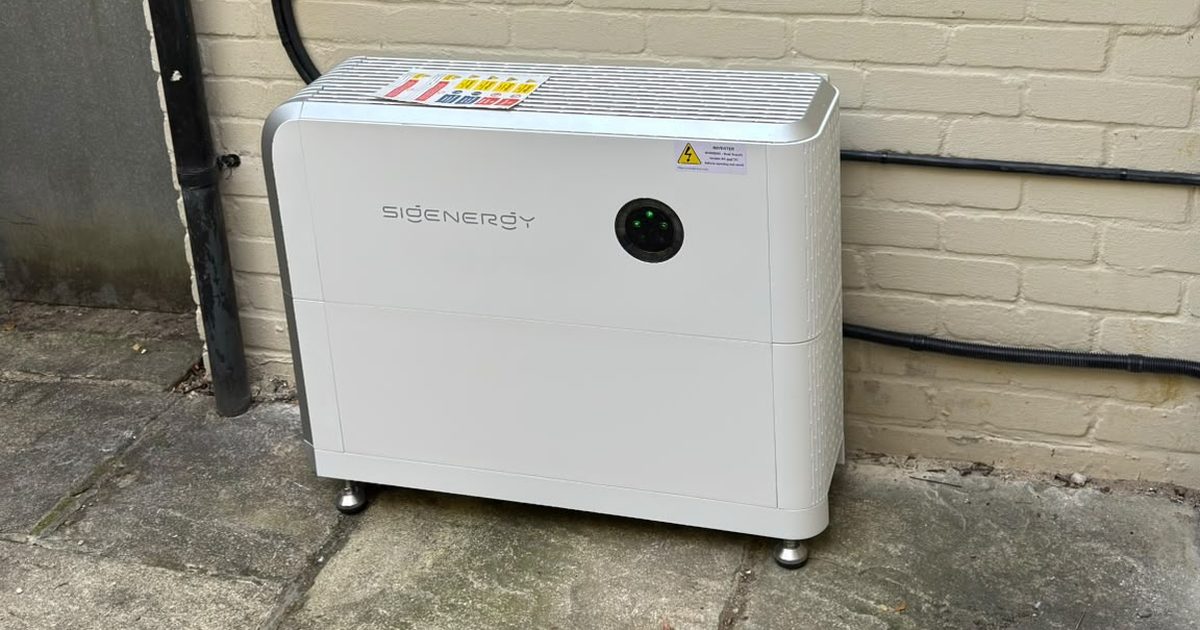
At a Glance: The Core Differences
The most important single difference between Sigenergy and GivEnergy is product philosophy: GivEnergy All-in-One is a mature, proven UK-optimised battery system focused on reliability, warranty, and compatibility. Sigenergy SigenStor is a more ambitious all-in-one platform that attempts to solve energy management, battery storage, EV charging, and vehicle-to-home capability in a single system.
For most Hampshire homeowners with a standard solar system who want reliable bill reduction: GivEnergy is the safer, simpler choice. For households with or planning an EV, wanting V2H (vehicle-to-home) capability, or needing a large (15kWh+) modular system: Sigenergy has compelling advantages.
Both are LiFePO4 (lithium iron phosphate) chemistry — the same safe chemistry used in the Tesla Powerwall 3, with no thermal runaway risk. Both qualify for 0% VAT and MCS certification. The decision comes down to your specific situation.
- GivEnergy strength: 12-year warranty, mature UK product, proven track record
- Sigenergy strength: 5-in-1 platform (inverter + battery + EV DC charging + V2H + energy management)
- Both: LiFePO4 chemistry, 0% VAT eligible, MCS certified installs available
- Best for standard solar: GivEnergy — simpler, cheaper, longer warranty
- Best for EV owners / complex systems: Sigenergy — unmatched EV integration
Technical Specifications: Side-by-Side
Here is a direct comparison of the current flagship products: GivEnergy All-in-One 2 (Gen 2) vs Sigenergy SigenStor.
Capacity options: GivEnergy All-in-One 2 comes in 9.5kWh and 13.5kWh versions, expandable to 19kWh in a stack. Sigenergy SigenStor starts at 9.0kWh (one battery module) and is expandable to 54kWh across multiple modules — significantly more scalable for large homes or future-proofing.
Round-trip efficiency: GivEnergy 96-97%. Sigenergy 96-97%. Essentially identical.
Depth of discharge: GivEnergy 98% DoD (class-leading — you can use almost all rated capacity). Sigenergy 90% DoD. The GivEnergy DoD advantage is meaningful at equivalent capacity.
Warranty: GivEnergy All-in-One 2: 12 years, 80% capacity retention guaranteed. Sigenergy: 5 years standard (10-year optional), 70% capacity retention at year 10. This is the starkest difference between the two products.
EV charging: GivEnergy: AC EV charging only via separate compatible charger. Sigenergy: built-in 25kW DC EV charger — approximately 10x faster than a standard 7kW AC home charger.
V2H / V2G: GivEnergy: not supported. Sigenergy: fully V2H and V2G capable with compatible EVs (Nissan Leaf, MG4, BYD Atto 3 and others).
- Capacity: GivEnergy 9.5-13.5kWh | Sigenergy 9-54kWh (modular)
- Round-trip efficiency: both ~96-97%
- DoD: GivEnergy 98% | Sigenergy 90% — GivEnergy advantage
- Warranty: GivEnergy 12 years | Sigenergy 5 years standard (10yr optional)
- EV DC charging: GivEnergy NO | Sigenergy YES (25kW built-in)
- V2H/V2G capable: GivEnergy NO | Sigenergy YES
The Sigenergy 5-year standard warranty is a significant weakness for a product at this price point. We always recommend the 10-year extended warranty option when quoting Sigenergy. The extended warranty is available at installation and covers battery cells, inverter components, and the integrated EV charging unit.
Warranty Deep Dive: Why the 12-Year vs 5-Year Gap Matters
The warranty difference between GivEnergy (12 years) and Sigenergy (5 years standard) is the most commercially significant factor in this comparison for most UK households.
Battery systems typically reach full financial payback in 7-10 years. With a 12-year GivEnergy warranty, your system is covered throughout the entire payback period and for 2-5 years of pure profit beyond it. With a 5-year Sigenergy standard warranty, you are out of warranty before the system has paid for itself.
The 10-year Sigenergy extended warranty (approximately £300-500 extra at installation) narrows the gap substantially but still falls 2 years short of GivEnergy's standard term. GivEnergy also guarantees 80% capacity retention over 12 years — a bankable guarantee that Sigenergy's 70% at year 10 comes close to but doesn't match.
For risk-averse households making a significant investment in a new technology, GivEnergy's warranty is a compelling differentiator. For households with EVs who value the V2H capability and faster EV charging, the Sigenergy premium may still be justified — but only with the 10-year extended warranty selected.
- GivEnergy 12-year warranty: covers full payback period and beyond
- Sigenergy 5-year standard: out of warranty before payback for most households
- Sigenergy 10-year extended: recommended minimum, closes the gap to GivEnergy
- Capacity guarantee: GivEnergy 80% at year 12 vs Sigenergy 70% at year 10
- Our recommendation: never install Sigenergy without the 10-year warranty extension
Octopus Tariff Integration: Which Works Better?
For Hampshire homeowners using or planning to use Octopus Agile, Intelligent Flux, or Cosy Octopus, how well the battery integrates with automated tariff management matters significantly.
GivEnergy has had strong Octopus compatibility since 2022. The GivEnergy portal (GivEnergy Cloud) integrates with Octopus Intelligent via API, enabling fully automated overnight charging at the cheapest available rates without manual scheduling. Intelligent Octopus Flux — the highest-paying export tariff (up to 30.31p/kWh between 4pm-7pm) — supports GivEnergy batteries for automated peak export.
Update, September 2026: Octopus paused new sign-ups to Flux and Intelligent Octopus Flux in March 2026. Standard Octopus Flux is taking new customers again (we checked on 16 September 2026). Intelligent Octopus Flux only works with batteries on Octopus’s compatibility list, so check yours is supported before you plan around it — we will confirm what is open to you, and whether your battery qualifies, at survey.
Sigenergy has more recent but rapidly improving Octopus integration. The SigenStor connects via the Sigenergy Energy Management System (EMS), which supports API connections to most major UK tariffs. As of March 2026, Sigenergy works with Octopus Agile, Intelligent Flux, and Cosy Octopus, but the integration is slightly less mature than GivEnergy's. Third-party energy management tools like Home Assistant and Amber integrate with both brands.
Conclusion: for Intelligent Octopus Flux integration, GivEnergy is slightly better tested and has been deployed at scale. Sigenergy's integration works and will continue to improve.
- GivEnergy + Intelligent Octopus Flux: mature, well-tested API integration
- Sigenergy + Intelligent Octopus Flux: functional but less battle-tested (as of March 2026)
- Both: compatible with Octopus Agile manual scheduling and Home Assistant
- For maximum tariff automation confidence: GivEnergy currently has the edge
- Sigenergy EMS: strong general energy management, improving UK tariff integration
On Intelligent Octopus Flux, the difference between GivEnergy and Sigenergy in Octopus API integration is typically worth £50-150/year in optimised export. This is real but not decisive — other factors (EV charging capability, warranty) should drive the decision for most households.
Sigenergy's Temperature Management Advantage
One underreported but practically significant Sigenergy advantage is its built-in battery heating pads. GivEnergy All-in-One 2 does not include battery heating as standard.
Why this matters: lithium iron phosphate batteries operate optimally at temperatures above 10°C. At temperatures below 5°C — common in unheated Hampshire garages in January and February — LiFePO4 batteries throttle their charge/discharge rate to protect cell integrity. This means a GivEnergy battery in an unheated garage will charge and discharge more slowly on cold winter nights, reducing the value you extract from overnight cheap tariff charging.
Sigenergy's integrated heating pads warm the battery cells to operational temperature before scheduled charging begins. In Hampshire's mild climate, this is an advantage primarily on the coldest winter nights (temperatures below 5°C occur on roughly 20-30 nights per year in the Fareham area). For batteries installed in heated indoor spaces, this advantage is irrelevant.
- Sigenergy: built-in battery heating pads maintain optimal temperature
- GivEnergy: no integrated heating — performance reduces below 5°C
- Practically relevant: unheated garages in Hampshire winter (20-30 nights/year)
- Indoor installations (utility room, etc.): temperature advantage irrelevant
- Outdoor cabinet installations: Sigenergy heating is a meaningful advantage
Installed Costs: GivEnergy vs Sigenergy in Hampshire 2026
Installed costs in Hampshire in 2026 (0% VAT, including full installation, commissioning, MCS certification, DNO notification, and DNO G98/G99 compliance paperwork):
GivEnergy All-in-One 2 — 9.5kWh: £3,800-4,500. GivEnergy All-in-One 2 — 13.5kWh: £4,800-5,800. GivEnergy stack — 19kWh: £7,200-8,500.
Sigenergy SigenStor — 9.12kWh (1 battery module): £5,200-6,500. Sigenergy SigenStor — 18.2kWh (2 battery modules): £7,500-9,000. These prices include the integrated inverter and EMS gateway (which GivEnergy All-in-One also includes as standard).
The Sigenergy premium over GivEnergy at equivalent capacity is typically £1,000-1,500. For households that can utilise the 25kW DC EV charger, this premium may represent excellent value — a comparable standalone 22kW AC EV charger costs £800-1,200 installed, so the built-in DC EV capability is roughly cost-neutral compared to buying both products separately.
For households without an EV (or who do not need DC fast charging), GivEnergy offers better value per kWh of storage capacity with a stronger warranty.
- GivEnergy 9.5kWh installed: £3,800-4,500 (best value per kWh)
- GivEnergy 13.5kWh installed: £4,800-5,800
- Sigenergy 9.12kWh installed: £5,200-6,500 (includes EV DC charger)
- Sigenergy 18.2kWh installed: £7,500-9,000
- Sigenergy premium vs GivEnergy: ~£1,000-1,500 — justified if you have an EV
Verdict: Which Should You Choose?
After installing both brands across Hampshire, our honest assessment:
Choose GivEnergy All-in-One 2 if: you do not have an EV (or your EV is never fast-charged at home), you want the best warranty (12 years vs 5 years standard), you want the most mature Octopus tariff API integration, or you want the best value per kWh of usable storage (98% DoD, market-leading).
Choose Sigenergy SigenStor if: you have an EV and want fast home DC charging (25kW vs 7kW standard AC), you want V2H capability to power your home from your car during a blackout, you need a large modular system (up to 54kWh), or you want built-in battery heating for an unheated garage installation — AND you specify the 10-year extended warranty.
The one scenario where we would always recommend Sigenergy over GivEnergy: if you own a bidirectional EV (Nissan Leaf, MG4, certain BYD models) and want to use V2H. GivEnergy simply cannot do this. The combination of Sigenergy's 25kW DC EV charging and V2H capability with a compatible EV and a smart tariff like Intelligent Octopus Flux creates a genuinely compelling return — exporting car battery electricity at 30p/kWh during peak hours and recharging cheaply overnight.
- Choose GivEnergy: no EV, best warranty, best value per kWh, mature Octopus integration
- Choose Sigenergy: EV owner needing DC fast charging, V2H user, large modular system
- Non-negotiable for Sigenergy: always specify the 10-year extended warranty
- V2H scenario: Sigenergy is the only choice — GivEnergy cannot support V2H
- Budget decision: GivEnergy offers more kWh per pound without EV requirements
Get a free quote from Solent Solar for both products. We install Sigenergy, Fox ESS, and GoodWe — we have no financial incentive to recommend one over another and will assess which suits your specific home, EV situation, and energy usage before making a recommendation.
Related Guides
Continue reading with these related articles


Ready to Get Started?
Book a free, no-obligation home survey and get a personalised quote for your property.