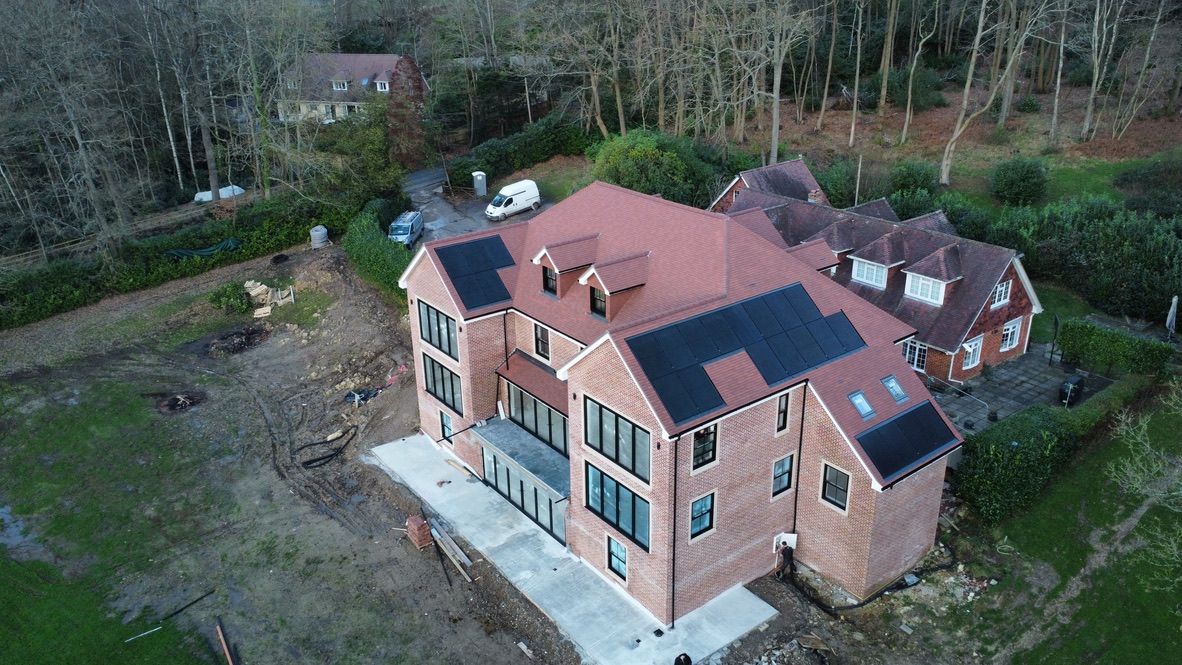
The Financial Case for Solar in Hampshire
Hampshire sits in one of the best solar regions in the UK. The county receives 1,750+ annual sunshine hours — 18% above the national average — which directly increases both your generation and your savings versus a home in the North of England.
A typical 4kW solar system in Hampshire generates 3,600-4,200 kWh per year. What it saves depends on when you use that electricity. In our worked example, a medium-use home that is out for part of the day saves about £700 a year from solar alone (26.32p import, 12p export, PVGIS yields), and a 5 kWh battery adds about £130 on top of that.
Against published installed costs of about £7,400 for a 4 kW system and about £11,400 with a 5 kWh battery (DESNZ and Octopus figures), that is a payback of roughly 11 years for solar alone and 14 with the battery. Your own figures will differ: our solar panels and battery cost guide and solar panel calculator let you test them.
- 4kW system generates 3,600-4,200 kWh/yr in Hampshire
- Annual savings: £900-1,200 from direct electricity use
- Battery adds £300-500/yr in additional savings
- SEG payments: £100-300/yr depending on export rate
- Payback period: 6-10 years (varies by system and usage)
- 25-year cumulative benefit: £15,000-35,000 for most homes
All domestic solar panel installations in the UK qualify for 0% VAT. On a £7,000 system, this saves £1,400 compared to the pre-2022 rate, effectively reducing the upfront cost and shortening the payback period.
When Solar Panels Are Not Worth It
Honest advice from a solar installer means telling you when solar is not the right decision. There are specific situations where the financial case is poor or where installation is not feasible.
A north-facing roof generates around 50-60% of the output of a south-facing equivalent. For most north-facing roofs, the reduced generation means the payback period extends to 15+ years, which may not be worth the investment. East and west-facing roofs generate approximately 80-85% of optimal, which is usually still viable. If the roof rules it out, the sums are worth redoing for a ground mounted system, allowing for the planning application and the buried cable run back to the house.
Heavy shading from trees, chimneys, or neighbouring buildings significantly reduces output. If your roof is shaded for more than 2-3 hours of peak sunshine daily, the financial case weakens considerably. Modern micro-inverters and optimisers can reduce the impact of partial shading, but they add cost and do not fully compensate for heavily shaded roofs.
Small roofs that cannot fit at least 6 panels (approximately 1.5kW) will produce relatively little energy, and the fixed costs of installation mean the economics are less favourable for very small systems. Very short planned occupancy — moving within 3-5 years — means you may not reach payback before selling, although solar typically adds more to property values than its installation cost.
- North-facing roofs: 50-60% output, longer payback
- Heavily shaded roofs: significantly reduced generation
- Very small roofs (fewer than 6 panels): fixed costs reduce ROI
- Planning to move within 3-5 years: may not reach individual payback
- Listed buildings: planning process adds cost and uncertainty
- Very low electricity usage (under 2,000 kWh/yr): smaller system may suit
We turn down approximately 5-10% of enquiries because we genuinely do not believe solar would be a sound investment for that particular property. A free survey will give you an accurate picture before you commit.
Solar Panels and Property Value
The question of whether solar panels increase property value is directly relevant to the "are they worth it" calculation, particularly if you plan to sell before reaching financial payback.
Multiple UK studies, including research from the Energy Saving Trust and property market analysts at Savills, suggest that solar panels add 4-6.8% to property values. At Hampshire's average house price of approximately £340,000, that represents a potential increase of £13,600-23,120 — significantly more than the cost of most solar installations.
Beyond headline value, solar panels improve your EPC rating, which has become increasingly important to buyers. Properties with EPC ratings of C or above sell faster and command higher prices. Estate agents increasingly report that buyers actively seek out homes with solar and battery storage, particularly as energy bills have remained elevated since 2021.
The key caveat is that property value increases are not guaranteed and depend heavily on local market conditions, buyer preferences, and the quality of the installation. However, the available evidence suggests that solar panels, particularly in energy-conscious Hampshire, are more likely to add than subtract from your property's market appeal.
- Estimated property value increase: 4-6.8%
- At Hampshire average price (£340k): equivalent to +£13,600-23,120
- Better EPC rating (D to C) adds estimated £11,157 on average
- Properties with solar sell faster in current market
- Buyers increasingly prefer homes with battery storage
If you are planning to sell within 5-7 years, solar still typically makes financial sense in Hampshire when you account for property value uplift alongside direct energy savings. The combination often exceeds the installation cost.
Real Numbers: What Hampshire Homes Actually Save
Rather than hypothetical estimates, these figures reflect real-world outcomes from Hampshire installations. Actual savings vary based on energy usage patterns — how much electricity you use during daylight hours — and how well your tariff is optimised.
A household that is home during the day (retirees, home workers, families with young children) can self-consume 50-70% of solar generation without any battery, significantly increasing savings. A household that is out all day and home only in the evening benefits most from battery storage, which stores the daytime generation for evening use.
The highest savings come from combining solar with a time-of-use tariff like Octopus Agile. This allows you to charge your battery from the grid at 5-10p/kWh overnight, then use stored energy during peak evening periods when grid electricity costs 30-50p/kWh. Households in Hampshire doing this report annual savings of £1,200-1,800, with payback periods of 5-7 years for a solar-plus-battery system.
- Solar-only, typical usage: £600-900/yr saving
- Solar + battery, typical usage: £900-1,300/yr saving
- Solar + battery + time-of-use tariff: £1,200-1,800/yr saving
- EV owner charging from solar: additional £500-1,000/yr saving
- Home workers / daytime users see 20-30% higher savings than commuters
The Bottom Line: Is Solar Worth It in 2026?
For most Hampshire homeowners with a south, east, or west-facing roof, solar panels in 2026 represent a sound financial investment. The combination of 0% VAT, Hampshire's above-average sunshine, elevated electricity prices, and falling installation costs means the payback period is shorter today than at any point in solar's history.
The technology has also matured significantly. Modern LiFePO4 batteries are rated for 10,000+ cycles. Panels carry 25-year performance warranties. MCS certification provides consumer protection that did not exist in the early market.
The cases where solar is not worth it are specific and identifiable: heavily shaded properties, very small roofs, north-only aspects, and listed buildings with complex planning requirements. A free, no-obligation survey will tell you clearly whether your home is suitable and give you accurate, property-specific payback calculations.
Our honest recommendation: if your roof is suitable, 2026 is a better time to install solar than waiting. Electricity prices are unlikely to fall significantly, and the 0% VAT rate, while expected to continue, is not permanently legislated beyond March 2027.
Request free quotes from at least two MCS-certified installers and ask them to show you actual generation estimates based on your roof orientation and shading, not generic figures. Compare the annual yield predictions, not just the price.
Related Guides
Continue reading with these related articles

Ready to Get Started?
Book a free, no-obligation home survey and get a personalised quote for your property.