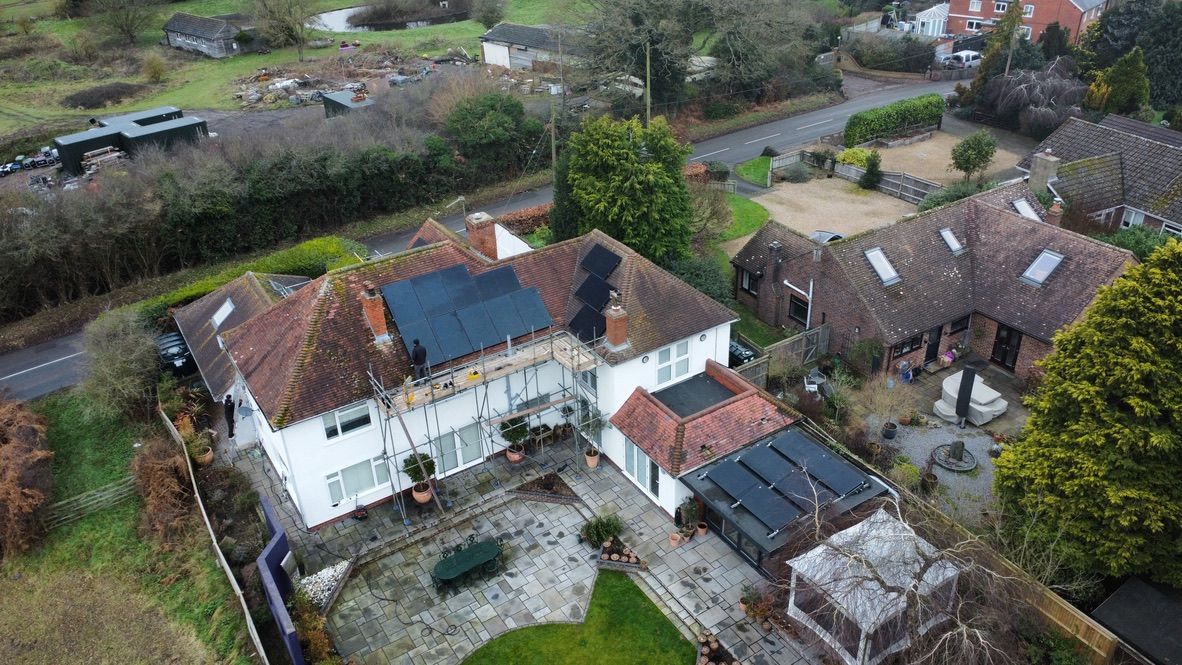
Permitted Development Rights for Solar Panels
In England, domestic solar panel installations are classified as permitted development under the Town and Country Planning (General Permitted Development) Order 2015, as amended. This means the vast majority of homeowners can install solar panels without submitting a planning application.
Permitted development applies when your solar panels are mounted on the roof or walls of a house, do not protrude more than 200mm from the roof slope or wall surface, do not extend above the highest part of the roof (excluding the chimney), and are not installed on a wall or roof slope facing a highway if the property is in a conservation area or World Heritage Site.
For ground-mounted solar panels, permitted development allows systems that are no more than 4 metres in height, no closer than 5 metres to any boundary, and with an array area not exceeding 9 square metres. Only one ground-mounted stand-alone solar installation is permitted per property.
- Roof-mounted: must not protrude more than 200mm from roof surface
- Must not extend above the highest point of the roof
- Ground-mounted: maximum 4m height, 5m from boundary, 9sqm area
- Only one ground-mounted array per property
- Panels must be removed when no longer needed for energy generation
Permitted development rights apply to houses only. If you live in a flat, maisonette, or converted property, you may need to apply for planning permission even for standard roof-mounted panels. Check with your local planning authority.
When Planning Permission Is Required
There are several situations where you will need to apply for full planning permission for solar panels in Hampshire. The most common is when your property is in a conservation area and the panels would be visible from a public highway on a principal or side elevation.
Listed buildings always require both planning permission and listed building consent for solar panel installation. This applies regardless of where on the building the panels are positioned, as listed building protection covers the entire structure and its setting. Grade I and Grade II* listed buildings face stricter scrutiny than Grade II.
Properties within the New Forest National Park and the South Downs National Park are subject to modified permitted development rights. While solar panels are not automatically excluded, the park authorities have additional powers to control development and may have issued Article 4 Directions that remove permitted development rights in specific areas.
If you have previously modified your home under permitted development and used your full allocation, or if your property has had its permitted development rights removed by condition on a previous planning approval, you will also need to apply.
- Conservation areas: panels visible from highway on principal elevation
- Listed buildings: always require planning permission and listed building consent
- New Forest National Park: check for Article 4 Directions
- South Downs National Park: additional controls may apply
- Flats and maisonettes: not covered by householder PD rights
- Properties with removed PD rights: check your title deeds
Installing solar panels without the required planning permission is a criminal offence. Your local council can issue an enforcement notice requiring removal at your expense. Always check before you proceed.
Hampshire Council Planning Contacts
Hampshire has 11 district and borough councils, each with its own planning department. For the New Forest area, the National Park Authority handles planning applications within the park boundary, while New Forest District Council covers areas outside it.
Fareham Borough Council manages planning for Fareham, Whiteley, Stubbington, Titchfield, and Portchester. The council has 13 conservation areas. Eastleigh Borough Council covers Eastleigh, Chandlers Ford, Hedge End, and Botley. Winchester City Council handles Winchester, Kings Worthy, and surrounding villages, with over 20 conservation areas.
Southampton City Council and Portsmouth City Council manage their respective cities independently. Gosport Borough Council, Havant Borough Council, and Test Valley Borough Council each handle their local areas. For properties near county boundaries, ensure you contact the correct authority, as administrative boundaries do not always align with postcode areas.
- Fareham Borough Council: 01329 236100
- Eastleigh Borough Council: 023 8068 8000
- Winchester City Council: 01962 840222
- Southampton City Council: 023 8083 3000
- Portsmouth City Council: 023 9282 2251
- New Forest National Park Authority: 01590 646600
- South Downs National Park Authority: 01730 814810
Most Hampshire councils offer a pre-application advice service for £50-150. This informal review of your proposal can save time and money by identifying potential issues before you submit a full application.
The Planning Application Process
If you need planning permission for solar panels, the application process is relatively straightforward for a householder. The current fee for a householder planning application in England is £258, and councils have a statutory period of 8 weeks to determine the application.
Your application will need to include a completed application form, a site location plan at 1:1250 or 1:2500 scale, existing and proposed elevation drawings showing the panel positions, a design and access statement, and photographs of the property and surrounding area. For listed buildings, a heritage impact assessment is also required.
We handle the entire planning process for customers in conservation areas and other restricted locations. Our team prepares all drawings, writes the supporting statements, and liaises with the planning officer throughout. This service is included at no additional cost for customers who proceed with our installation.
- Application fee: £258 for householder applications
- Determination period: 8 weeks (statutory)
- Documents needed: site plan, elevations, photographs, design statement
- Listed buildings: additional heritage impact assessment required
- Appeals possible if application is refused
Tips for Getting Planning Approval
If your solar installation requires planning permission, there are several strategies that significantly improve your chances of approval. The single most important factor is minimising visual impact, particularly in conservation areas and national parks.
Choose all-black panels and all-black mounting hardware. The contrast between dark panels and traditional roof materials is less jarring than silver-framed panels on a dark roof. In-roof systems that replace existing tiles and sit flush with the roofline are viewed more favourably by planning officers than on-roof systems that project above the surface.
Position panels on the least visible roof slope where possible. Rear roof slopes are almost always acceptable, even in conservation areas. If your property has both a south-facing and a north-facing roof slope, a system on the south slope generates significantly more energy, but if the south slope faces the highway, a larger system on the rear may be the better overall solution.
Engage early with the planning authority. Pre-application advice costs a modest fee but provides invaluable insight into what the planning officer considers acceptable. Demonstrating that you have considered and addressed visual impact concerns in your application shows good faith and increases the likelihood of approval.
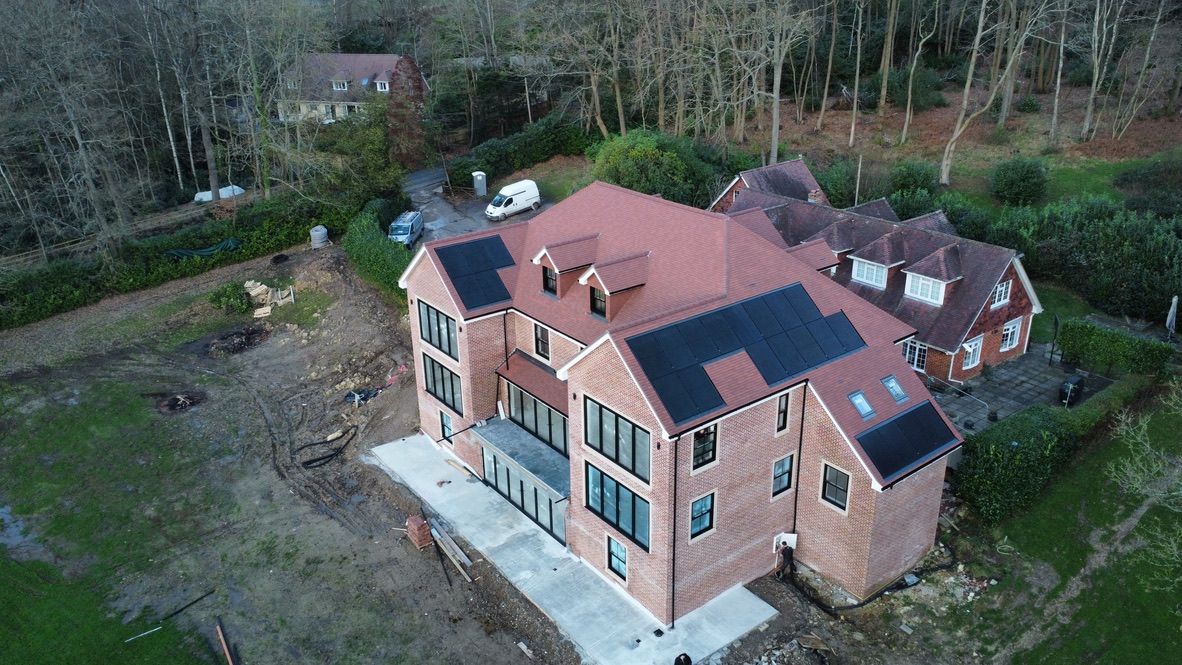
All-black panels on a dark roof are virtually invisible from street level, even at close range. We use premium all-black panels as standard on all conservation area installations, and the planning approval rate for our applications exceeds 95%.
Related Guides
Continue reading with these related articles

Ready to Get Started?
Book a free, no-obligation home survey and get a personalised quote for your property.
Related services & guides
Ready to get it installed?
Tom and his small team fit these systems across the Solent — survey, design, DNO paperwork and install all handled by the same team.